AskSmarty: Study Engineering in SA Without Physical Science
Study engineering in SA without matric physical science: foundation years, TVET diplomas or bridging routes. Use AskSmarty to check your eligibility...
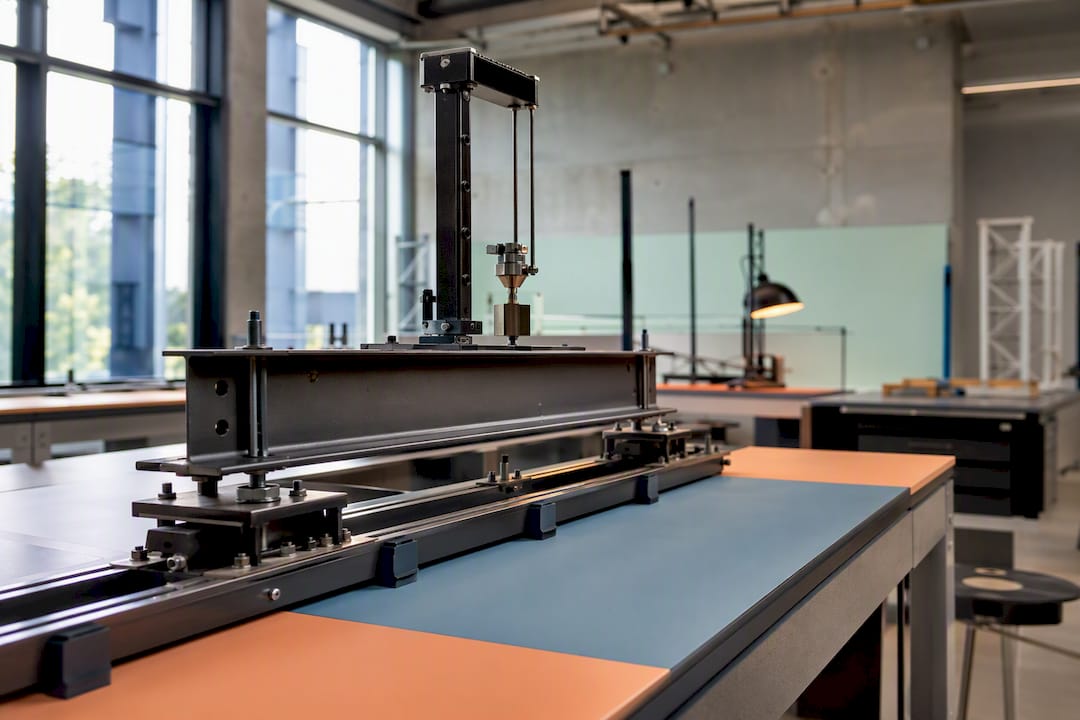
Yes, you can reach an engineering degree without having done physical science at matric level, but almost every realistic route adds a step. That usually means a foundation year, a bridging programme, or entering through a TVET diploma and transferring across later. A handful of engineering-adjacent degrees will accept you directly if your maths is strong. Start by checking a specific programme’s actual entry list on the AskSmarty programme database rather than assuming a blanket rule applies everywhere.
TL;DR:
- Strong mathematics may allow entry into engineering programs that do not explicitly list physical science as a requirement, but check individual program policies first.
- Foundation years, diploma pathways, and bridging courses offer realistic routes into engineering without prior physical science from matric, often adding extra time and cost.
- Lateral entry from TVET diplomas is common, with some institutions accepting mathematical literacy or lower maths marks alongside sciences like life sciences.
- Universities frequently have inconsistent or unclear phrasing regarding science prerequisites, making it crucial to verify specific program requirements directly.
- Prioritizing the strengthening of mathematics skills increases the chances of admission, as maths scores are broadly weighted more heavily than physical science in most cases.
Table of Contents
- No physical science for engineering: which degrees actually need it
- Practical South African routes into engineering without prior physical science
- How to prepare: concrete steps that improve your admission chances
- How AskSmarty helps you check your real options
- Costs and timelines for foundation, bridging, and diploma routes
- Checking exceptions in specific university programmes
- What the research actually tells us
- Sources
- FAQ
No physical science for engineering: which degrees actually need it
Not every engineering qualification in South Africa treats physical science as non-negotiable, but most of the traditional ones do. If you’re searching for options because physical science wasn’t on your matric timetable, the honest starting point is knowing which doors are genuinely closed and which are just harder to open.
Mechanical, civil, and aeronautical engineering programmes at nearly every South African university list physical science as a firm requirement, usually alongside a high APS score in mathematics. These fields lean on mechanics, thermodynamics, and structural physics from first year onward, so universities rarely waive the prerequisite. Electrical and electronic engineering sit in a similar bracket at most institutions, though a small number of electronic engineering technology diplomas at universities of technology have shown more flexibility, particularly where the curriculum builds foundational physics into year one rather than assuming it.
Software engineering and information technology degrees are where things loosen up. Several programmes accept students without physical science provided mathematics is strong, because the core content is computational rather than mechanical. Industrial engineering and some engineering management streams occasionally follow the same pattern. If computer science or a related technology degree is on your radar as a plan B, it’s worth comparing entry lists side by side with engineering, since the overlap in required subjects is often smaller than students expect.
Mathematics almost always outweighs physical science in how admissions offices score you. An APS calculation typically rewards a strong maths mark more heavily than any other single subject, and some engineering technology diplomas will consider a good maths pass with life sciences or information technology in place of physical science. That’s not a loophole so much as a reflection of what first-year engineering maths actually demands: calculus and algebra fluency matter immediately, while physics content can, in some programmes, be taught from scratch.
Here’s what to actually check on a programme page before assuming you’re excluded:
- Whether the requirement says “physical science” specifically or the broader “a science subject,” which sometimes opens the door to life sciences or information technology instead.
- Whether the listed APS includes physical science as a compulsory subject in the calculation or simply as one of several electives counted.
- Whether the faculty offers a foundation or extended curriculum programme (often listed separately from the mainstream degree) with a lower or different subject requirement.
- Whether the qualification is a BEng/BSc Eng (usually stricter) or a Diploma/BTech in engineering technology (often more flexible).
Universities also don’t phrase things consistently. One institution’s “recommended” subject is another’s “compulsory” one, and a programme labelled “engineering” at a university of technology can carry a completely different subject list than one with the same name at a traditional university. That inconsistency is exactly why checking the individual programme page matters more than trusting general advice, including this article.
Practical South African routes into engineering without prior physical science
If physical science isn’t on your matric certificate, there are four realistic ways in, and they differ enormously in cost, time, and difficulty.
-
Foundation or extended curriculum programmes. Most engineering faculties in South Africa run an extended or foundation year alongside their mainstream degree, built specifically for students who meet the maths bar but fall short on science preparation. These programmes typically cover applied physics and reinforced mathematics over an additional year, functioning much like the foundation year model used at the University of Bristol, where students without the standard prerequisites are brought up to first-year readiness before starting the core degree. Extended programmes suit students whose maths is solid but whose science background is thin or absent entirely.
-
TVET diploma into degree (lateral entry). A National Diploma in engineering studies at a TVET college or university of technology often has a more forgiving entry list than a full BEng, sometimes accepting mathematical literacy or a lower maths mark alongside life sciences instead of physical science. After completing the diploma and gaining relevant experience, many graduates apply for lateral entry into a BTech or an advanced diploma, and from there some progress into a full engineering degree with credit for prior study. It’s slower, usually adding two to three years before you even reach degree-level study, but it’s one of the most walked paths for students who didn’t take physical science at school.
-
Bridging modules and short courses. Some universities will accept a completed bridging course in physics or applied maths as proof that you can handle the degree’s early content, even without a matric pass in the subject. These aren’t universal, and availability changes year to year, so confirm directly with the faculty rather than assuming a bridge course guarantees admission.
-
Direct entry without physical science. This exists, but it’s the exception, not the rule. It shows up mostly in engineering technology diplomas and some industrial or software engineering streams where a strong maths result carries the application on its own. Where it happens, universities often issue a conditional offer requiring you to complete a supplementary physics module in your first year or pass a bridging assessment before second year.
Pro Tip: Don’t assume “diploma” means a lesser path. A National Diploma followed by lateral entry is one of the most common routes into professional engineering registration in South Africa, and it often costs less overall than restarting a full degree from scratch after a failed direct application.
Whichever route you take, expect physics content to show up eventually. Engineering degrees are built on scientific principles even when the entry requirement doesn’t demand physical science upfront, and engineering education itself is defined by the application of those principles, not by whichever subjects appeared on your matric certificate. Skipping the subject at school doesn’t mean skipping it forever. It just changes when you learn it.
How to prepare: concrete steps that improve your admission chances
Preparation matters more than the label on your matric certificate. Universities want evidence you can handle the maths and reasoning an engineering degree demands, and that evidence can come from more than one source.
Prioritise these areas, in roughly this order:
- Algebra and calculus readiness. This is the single biggest predictor of whether extended or foundation students cope in first year. Short courses through TVET colleges, university continuing education departments, or recognised private providers can close gaps quickly.
- Introductory or applied physics. Even a basic short course gives you working vocabulary for mechanics and forces before you hit it in a formal module. Several universities list recommended (not compulsory) preparatory physics content on their foundation programme pages.
- Practical or lab exposure. If you can get hands-on experience through a TVET workshop module or a school outreach programme, it signals comfort with applied problem solving that admissions panels notice in a statement of purpose.
- Mathematical literacy versus core mathematics. If your school offered only mathematical literacy, check early whether your target programme accepts it at all. Many engineering degrees, even flexible ones, require core mathematics as an absolute floor.
Admissions assessments vary by institution. Your APS score remains the primary screening tool, and some universities use the National Benchmark Tests (NBTs) to assess academic literacy and quantitative reasoning where a matric subject gap exists. A strong NBT quantitative literacy result can sometimes offset a weaker subject profile, though it won’t override a hard prerequisite like physical science where one is genuinely non-negotiable.
Build your application file before you need it: certified transcripts, any bridging or short-course certificates, and a short statement explaining why physical science wasn’t part of your matric subjects and what you’ve done since to prepare. Admissions committees respond better to a clear, honest explanation than to an application that ignores the gap entirely.
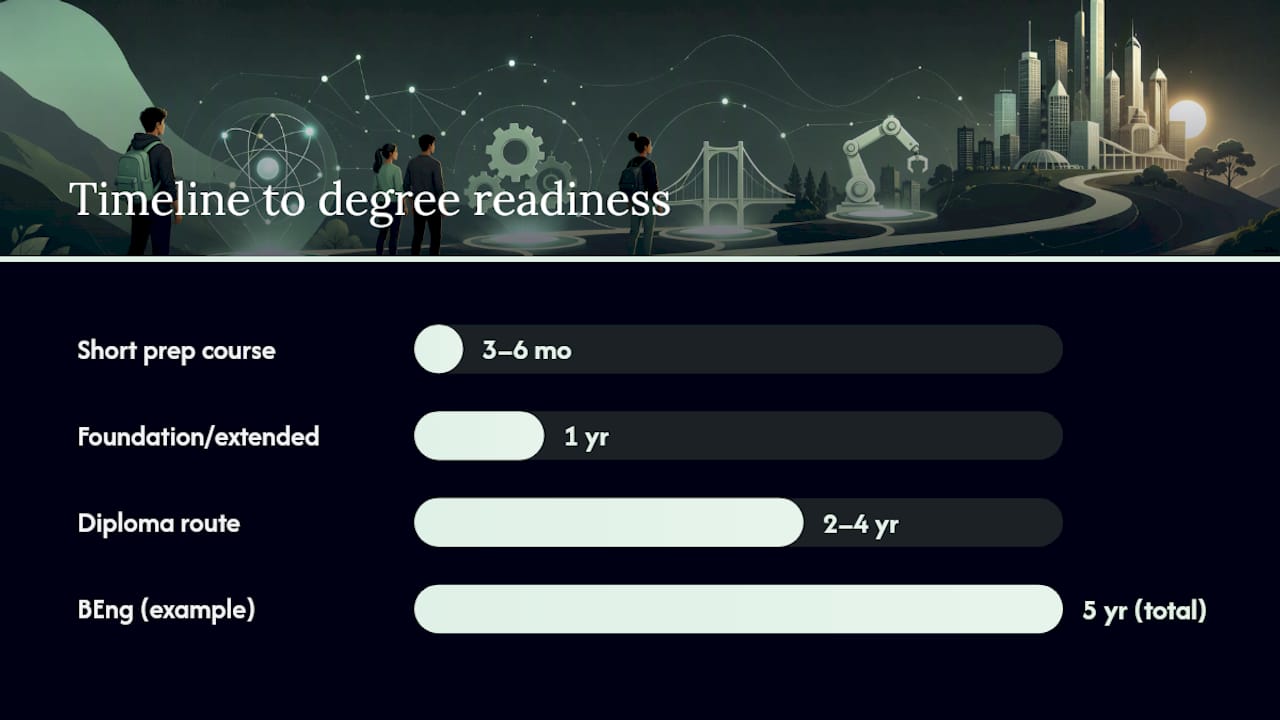
A realistic timeline looks like this. In the first three to six months after matric, focus on a preparatory maths or physics short course while you finalise applications. Over the following year, a foundation or extended curriculum programme brings you to first-year readiness if you’re accepted into one. If you go the diploma route instead, expect two to four years before you’re eligible to laterally enter a degree programme, depending on the institution and how credits transfer.
Community discussion among engineering students and graduates, including threads on forums like IET EngX, consistently echoes the same pattern: diplomas and foundation years work, but almost always with an extra year added somewhere in the process. Nobody skips the physics content entirely. They just reschedule it.
How AskSmarty helps you check your real options
Guessing which programmes will accept you without physical science wastes time you don’t have during application season. AskSmarty was built to remove that guesswork by matching your actual marks against real entry requirements across South Africa’s universities and colleges, rather than asking you to interpret vague subject lists yourself.
Here’s what the platform gives you specifically for this situation:
- The APS calculator works out your admission score from your matric results and tells you which programmes you currently qualify for, foundation options included.
- The searchable programme database covers more than 1,700 university and college programmes, so you can filter for engineering and engineering-technology options that don’t list physical science as compulsory.
- Programme pages for institutions like Durban University of Technology and University of KwaZulu-Natal show specific subject and APS requirements rather than generic university-wide statements, which matters given how much requirements vary between faculties at the same institution.
- Your marks stay on your device throughout the process. Nothing gets uploaded or stored, which matters if you’re comparing options across multiple universities before deciding where to apply.
Run your marks through the calculator first, then compare the programmes it surfaces. If most of your matches come back as foundation or extended curriculum options, that’s a signal worth taking seriously rather than working around. Cross-check the detailed admission requirements for anything unusual, like a conditional offer clause, and always confirm the final word with the specific university’s admissions office before you commit time or money to an application.
| What you check | Where to check it | What it tells you |
|---|---|---|
| Your APS score | AskSmarty calculator | Which programmes you currently qualify for |
| Programme-specific subject list | AskSmarty programme search | Whether physical science is compulsory or flexible |
| Foundation or extended options | University’s own faculty page, cross-checked on AskSmarty | Whether an extra preparation year is required |
| Final confirmation | University admissions office directly | Whether a conditional offer applies to your case |
Costs and timelines for foundation, bridging, and diploma routes
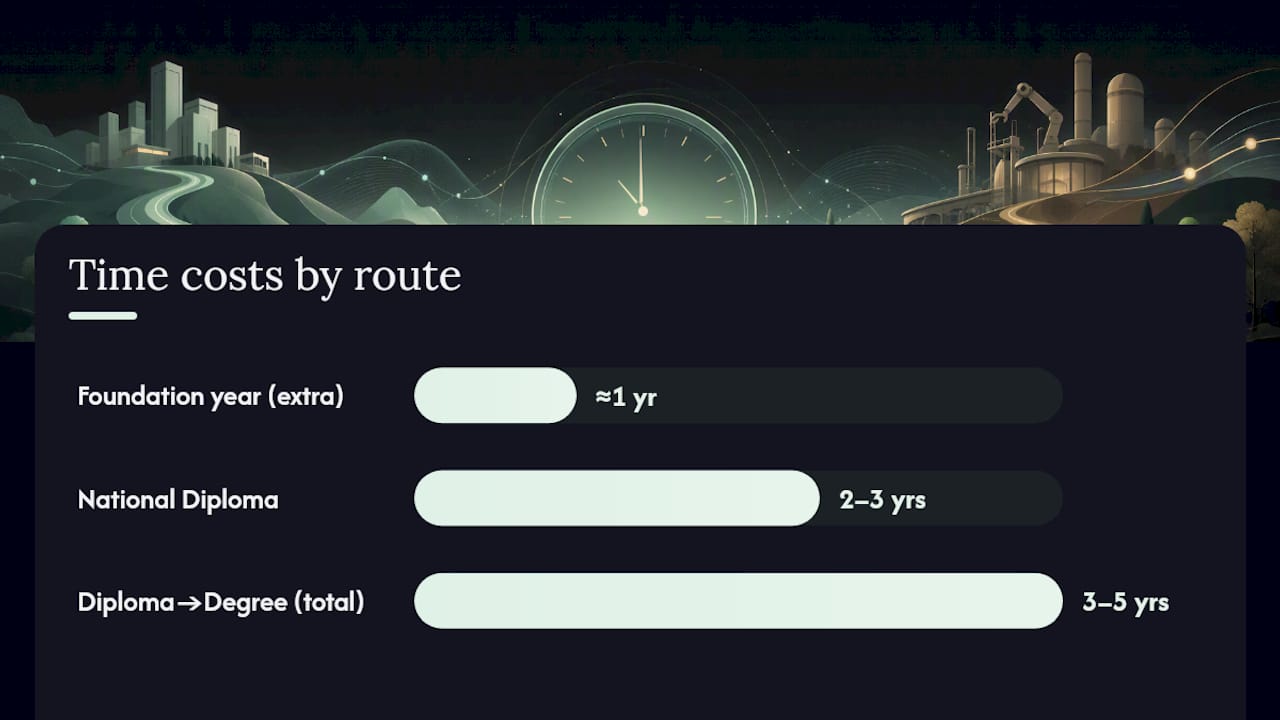
Time is the cost most students underestimate. A standard foundation or extended curriculum year adds roughly one year to your degree, meaning a four-year BEng effectively becomes a five-year commitment. The diploma-to-degree route adds more: expect two to three years to complete a National Diploma, followed by one to two additional years if you pursue lateral entry into a BTech or degree programme, depending on how many credits the receiving institution recognises.
Fees vary widely between public universities, universities of technology, and private providers, and they change year to year, so treat any figure you read as a rough guide rather than a quote. Public university foundation programmes generally cost less than private bridging courses, though private providers sometimes offer more flexible scheduling for students working part-time. Contact the specific faculty directly for current fee schedules before budgeting, since foundation-year fees aren’t always published alongside mainstream degree costs.
A few ways to manage the cost:
- Check whether NSFAS funding extends to your specific foundation or extended curriculum programme. Not every one qualifies, so confirm before assuming coverage.
- Look into part-time or block-release diploma options if you’re working, since some TVET colleges offer accredited part-time engineering diplomas that let you earn while you study.
- Ask employers in engineering-adjacent industries about sponsored study. Some larger firms fund diploma or bridging study for employees who show aptitude, particularly in artisan-to-engineer pipelines.
- Confirm accreditation with the Engineering Council of South Africa (ECSA) before enrolling in any diploma or foundation programme. An unaccredited qualification can block your path to professional registration later, no matter how good the teaching was.
Skipping the accreditation check to save money upfront is the single most common regret students report after committing to a cheaper, unrecognised alternative.
Checking exceptions in specific university programmes
General rules break down fast once you look at individual faculties. One university’s engineering technology diploma might list physical science as “recommended,” while an almost identical qualification at another institution marks it “compulsory.” The only reliable way to know is to check the programme page itself, not a general university brochure or a secondhand summary from a school guidance counsellor.
Start with the faculty’s official requirements page, not the general admissions overview, since engineering faculties often set their own subject rules independent of the university-wide minimum. Look specifically for language distinguishing a BEng/BSc Eng from a Diploma or Advanced Diploma in engineering, since the two typically carry different subject lists even when housed in the same department. Where a programme mentions a foundation or extended curriculum option, check whether it has separate, often more flexible, entry requirements from the mainstream version of the same degree.
International examples show how much these rules can shift. Regulatory changes, like the ones the All India Council for Technical Education has made to admission eligibility, demonstrate that subject requirements for engineering entry aren’t fixed globally. They’re policy decisions specific to each country’s regulator. That context is useful for understanding how flexible these rules can theoretically be, but it has no bearing on South African requirements. Always confirm directly with the South African institution and, where relevant, with ECSA.
What the research actually tells us
Most advice on this topic treats “physical science required” as a fixed wall, when in practice it behaves more like a sliding scale that depends entirely on the institution and the specific qualification type. The conventional advice, essentially “you can’t do engineering without physics,” oversells the rigidity of the system and undersells how much foundation years, diplomas, and lateral entry have normalized in South African higher education.
What gets underrated is mathematics. Students spend enormous energy worrying about the missing physical science subject and comparatively little time strengthening the maths that admissions offices actually weight more heavily. If you take one thing from this guide, prioritise closing your maths gap before anything else. Physics catches up. Weak maths follows you through every year of the degree.
The honest priority order is: check your specific programme’s real requirement, strengthen maths immediately, then treat a foundation year or diploma route as a legitimate strategy rather than a consolation prize.
— Nkosi
Sources
- University of Bristol — foundation in science, engineering and mathematics
- Boston University — engineering is not science (dean’s perspective)
- Indian Express — AICTE changes to eligibility (contextual example)
FAQ
Can I still do engineering without physics?
Yes, particularly through foundation or extended curriculum programmes, TVET diploma routes with lateral entry, or engineering technology and software engineering degrees that weigh mathematics more heavily than physical science.
Which engineering degree is most in demand in South Africa?
Civil, electrical, and mechanical engineering consistently draw the highest application volumes at South African universities, though software and industrial engineering have grown steadily as technology-focused industries expand.
What engineering course can I study without physics?
Software engineering, some information technology degrees, and select engineering technology diplomas at universities of technology are the most flexible, often prioritising a strong mathematics result over a physical science pass.
Can you be a doctor without physical science?
Medicine in South Africa almost universally requires physical science as a core admission subject, unlike some engineering technology and software pathways, so a missing physical science pass is a harder barrier in that field.
Recommended
Published 2026-08-31 · AskSmarty is an independent guide. Confirm anything time-sensitive on the official source.