Optometry requirements in South Africa: your full guide
Discover the essential optometry requirements for practicing in South Africa, including degrees, internships, and accreditation details.
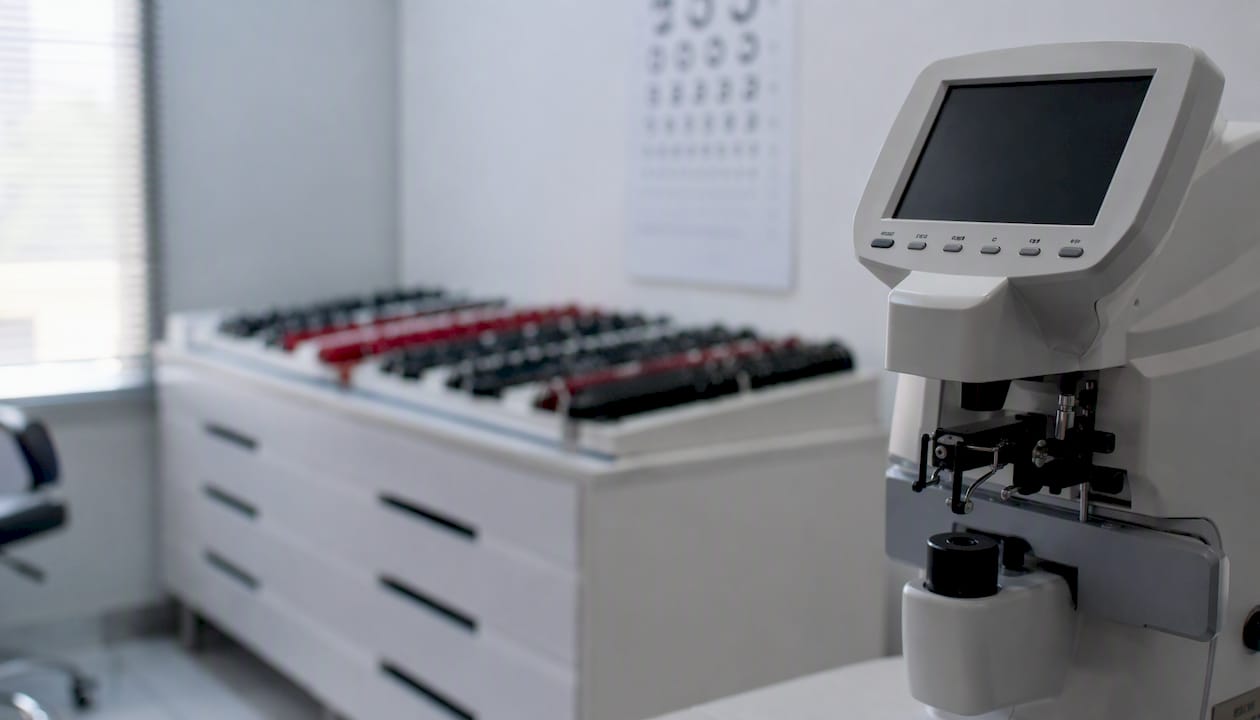
To practise as an optometrist in South Africa, you need three things: a Bachelor of Optometry from an accredited university, a mandatory post-graduation internship, and registration with the Health Professions Council of South Africa (HPCSA). That sequence is fixed by law. There is no shortcut around any step.
Before you get to the internship, you need to get into the degree. That means hitting the right APS and subject levels at matric. The University of Johannesburg, for example, sets its APS at 31 with a minimum Level 5 in Mathematics, Physical Sciences, Life Sciences, and your language of teaching and learning. Other universities set different thresholds, so your first move is knowing exactly where your marks sit.
- Complete a Bachelor of Optometry (four years, full-time) at an accredited SA university
- Meet the APS and subject minimums for your chosen institution (aim for 31+ at UJ; 27+ at UL)
- Complete a mandatory internship after graduation
- Register with the HPCSA before practising independently
Pro Tip: Use the Asksmarty APS calculator right now to enter your matric subjects and see which optometry programmes you realistically qualify for. Your marks stay on your device.
Key takeaways
Qualifying as an optometrist in South Africa requires a four-year Bachelor of Optometry, a mandatory post-graduation internship, and full HPCSA registration before you can practise legally.
| Point | Details |
|---|---|
| Degree required | A four-year Bachelor of Optometry from an accredited South African university is the mandatory starting point. |
| APS and subject minimums | Target an APS of 31+ (UJ) or 27+ (UL); Level 5 in Mathematics, Physical Sciences, Life Sciences, and English is typically required. |
| Post-degree steps | Complete a mandatory internship, register provisionally with the HPCSA, then apply for full registration after internship completion. |
| CPD obligations | Annual HPCSA renewal and continuing professional development points are required to maintain lawful registration. |
| Asksmarty | Use the free Asksmarty APS calculator to match your matric results to eligible optometry programmes across South Africa instantly. |
Table of Contents
- What are the academic entry requirements for optometry?
- Which South African universities offer a Bachelor of Optometry?
- How long is the Bachelor of Optometry and what does training involve?
- What do you do after graduation: internship and HPCSA registration
- How to apply: documents, portals, and deadlines
- Practical ways to strengthen your optometry application
- How Asksmarty helps you verify eligibility and find the right programme
- What admissions teams actually look for beyond your APS
- Asksmarty gives you a clear starting point for your optometry application
- Sources
- FAQ
What are the academic entry requirements for optometry?
The optometry entry requirements in South Africa are built around three pillars: your APS score, your performance in specific subjects, and how universities apply their selection rules.
APS score: Most Bachelor of Optometry programmes fall in the APS range of 27–33, depending on the institution. Hitting the published minimum makes you eligible to apply. It does not guarantee a seat. Programmes are capped, and in competitive cycles the effective cut-off often lands several points above the published floor.
Required subjects and minimum levels: Universities consistently require strong performance in the following:
- Mathematics (not Mathematical Literacy): typically Level 5 or higher
- Physical Sciences or Life Sciences: typically Level 5 or higher
- Language of teaching and learning (usually English): Level 5 or higher
The ASCO prerequisites summary confirms that optometry programmes internationally expect at least one year each of biology, general chemistry, general physics, English, and college mathematics. South African programmes embed these expectations directly into the matric subject requirements above.
Selection rules: Life Orientation is excluded from APS calculations at most South African universities. That means your APS is calculated across your six best subjects excluding Life Orientation. Some institutions also apply additional selection criteria such as interviews or written assessments after the initial APS shortlist.
| Dimension | Typical requirement |
|---|---|
| APS range | 27–33 (varies by institution) |
| Mathematics | Level 5 minimum (not Maths Literacy) |
| Physical Sciences / Life Sciences | Level 5 minimum |
| Language of instruction (English) | Level 5 minimum |
| Life Orientation | Excluded from APS calculation |
| Additional selection steps | Interviews or assessments at some institutions |
Understanding how APS is calculated and how Life Orientation is treated is worth doing before you finalise your application list.
Pro Tip: If you are one or two levels short in a science subject, investigate bridging programmes or the option to rewrite that subject. Raising a single subject from Level 4 to Level 5 can move you from marginal to competitive in a capped programme.
Which South African universities offer a Bachelor of Optometry?
Three universities are the primary providers of the Bachelor of Optometry in South Africa. Each has its own APS threshold, selection rules, and application process.
University of Johannesburg (UJ) sets an APS of 31 and requires Level 5 in Mathematics, Physical Sciences, Life Sciences, and the language of instruction. UJ is one of the most established optometry faculties in the country, and its programme is consistently oversubscribed. Meeting 31 puts you in the eligible pool; the actual selection cut-off in a given year may be higher depending on the applicant cohort. Check the UJ programme guide on Asksmarty for current deadlines and application portal details.
University of KwaZulu-Natal (UKZN) runs a clinically intensive four-year programme with a strong emphasis on supervised patient examinations. UKZN’s typical APS threshold sits around 33 (excluding Life Orientation), making it one of the more competitive entry points. The programme’s clinical requirements are among the most structured in the country, with documented patient exam totals forming part of the graduation criteria.
University of Limpopo (UL) provides an entry point with an APS threshold around 27 for consideration in health-related programmes, though subject minimums and selection rules still apply. UL’s lower published APS reflects regional access priorities, not a lower standard of training. Selection remains competitive relative to the applicant pool.
A few important points that apply across all three:
- Published APS values are minimums for eligibility, not admission guarantees
- Programmes are capped; the effective cut-off shifts each cycle based on applicant performance
- Subject levels matter as much as the total APS score. A high APS with a weak Mathematics result will typically disqualify an application
Pro Tip: Apply to more than one institution. If your APS sits between 27 and 31, include UL as a realistic option alongside UJ and UKZN. Spreading applications across institutions with different thresholds is standard practice for competitive health programmes.
How long is the Bachelor of Optometry and what does training involve?
The Bachelor of Optometry is a four-year, full-time degree structured across eight semesters. The workload is science-heavy from the start and becomes progressively clinical as you move into the later years.
The curriculum covers a broad range of vision and ocular health disciplines. Students work through:
- Vision science and optics
- Ocular anatomy and physiology
- Refractive care and contact lens fitting
- Binocularity and paediatric vision
- Ocular disease diagnosis and management
- Clinical practice and patient communication
The clinical component is where most students underestimate the commitment. UKZN’s programme requires students to record supervised clinical patient examinations as a graduation requirement, with documented totals that must be reached before a student can complete the degree. UKZN requires students to complete a range of documented patient exams as part of its clinical requirements. Students must arrange placements with university-approved clinics and keep detailed records throughout.
Optometry is regulated as primary healthcare in South Africa. That means the training is designed to produce diagnostically competent clinicians, not generalist science graduates. The clinical hours are not optional extras; they are built into the degree structure and assessed formally.
What do you do after graduation: internship and HPCSA registration
Graduating with a Bachelor of Optometry does not give you the right to practise. The post-degree pathway has clear, mandatory steps.
Step 1: Complete the mandatory internship. After graduation, you must complete a supervised internship to gain the clinical experience required for independent practice. This internship is a legal prerequisite for final HPCSA registration, not an optional career move.
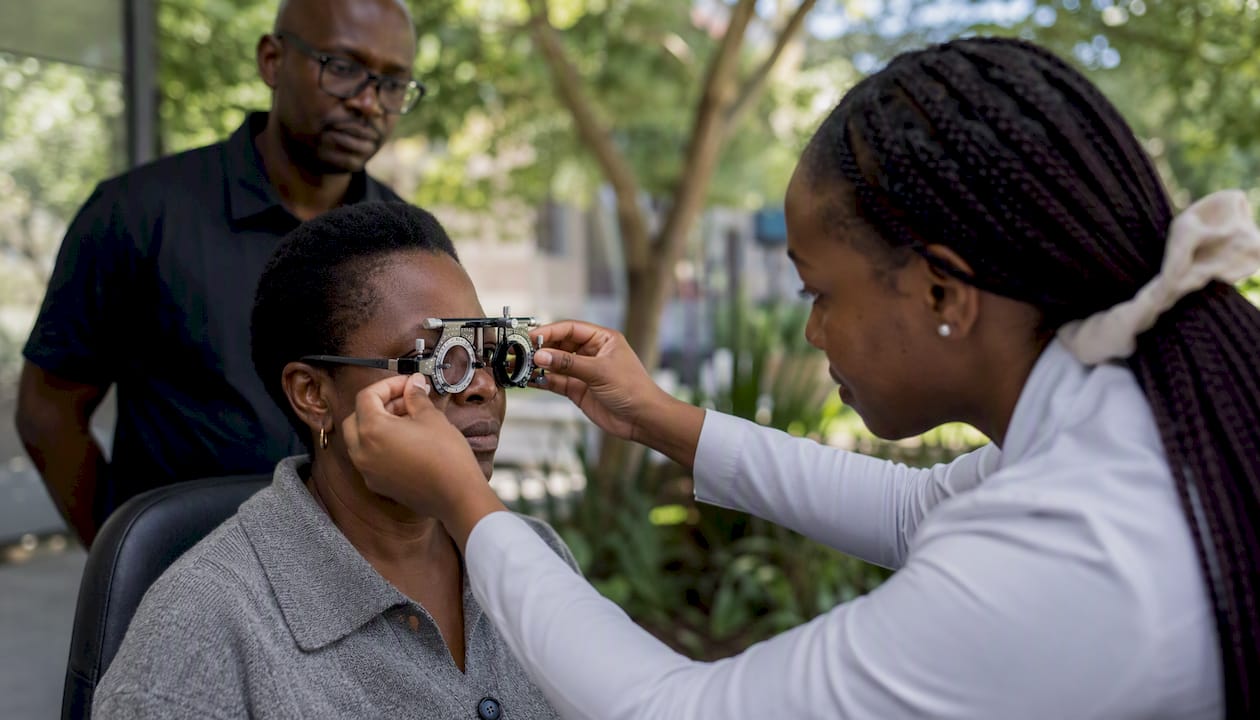
Step 2: Provisional HPCSA registration. During the internship period, graduates register provisionally with the HPCSA. This provisional status allows supervised practice. Practising without any form of HPCSA registration is illegal under South African health professions law.
Step 3: Final HPCSA registration. Once the internship is completed and all documentation is submitted and verified, you apply for full registration. The HPCSA reviews your internship records, qualifications, and any required assessments before granting final registration.
Ongoing obligations after registration:
- Annual registration renewal fees paid to the HPCSA
- Continuing Professional Development (CPD) points accumulated each cycle to maintain registration
- Failure to meet CPD requirements or renew registration results in lapsed registration and the inability to practise legally
Pro Tip: Start gathering your documents before your internship ends: certified degree certificate, internship completion letter, identity documents, and proof of CPD activities. HPCSA processing takes time, and administrative delays are common. Having everything ready in advance prevents gaps in your registration status.
How to apply: documents, portals, and deadlines
South African university applications for health programmes like optometry typically open mid-year and close between August and September for the following academic year. Missing the deadline usually means waiting another full cycle.
Documents you will need:
- Certified copy of your final NSC (matric) certificate or most recent school results
- Full academic transcripts (if applying as a mature or transfer student)
- Certified copy of your South African ID or passport
- Completed online application form via the university’s official portal
- Any additional declarations or motivation letters required by the specific faculty
International examples, such as Ohio State’s optometry admissions process, also include letters of recommendation and documented shadowing hours. South African programmes may not require all of these formally, but having a reference from a science teacher or an optometrist you have shadowed strengthens your application in competitive selection rounds.
Where to apply:
- UJ: via the UJ online application portal (uj.ac.za)
- UKZN: via the UKZN online application system (ukzn.ac.za)
- UL: via the UL admissions portal (ul.ac.za)
The Asksmarty how-to-apply guide walks through the South African university application process step by step, including portal navigation and document preparation.
Pro Tip: Track your application status through the university’s own status portal and cross-check with Asksmarty’s application status tool. If you miss a deadline, contact the faculty admissions office directly. Some institutions accept late applications for unfilled spots, but this is never guaranteed for capped health programmes.
Practical ways to strengthen your optometry application
Getting your APS above the minimum is the floor, not the ceiling. Here is what actually moves the needle in a competitive selection cycle.
Raise your subject levels, not just your total APS. A Level 6 in Mathematics and Physical Sciences carries more weight than a high APS built on strong performance in less relevant subjects. Admissions teams for health programmes look at science subject consistency first.
Arrange optometrist shadowing. Spending time in a working optometry practice gives you two things: a realistic picture of the profession and a reference from a registered optometrist. Even a few sessions is worth documenting. Some selection processes ask about clinical exposure, and a letter from a practising optometrist is a credible signal of genuine interest.
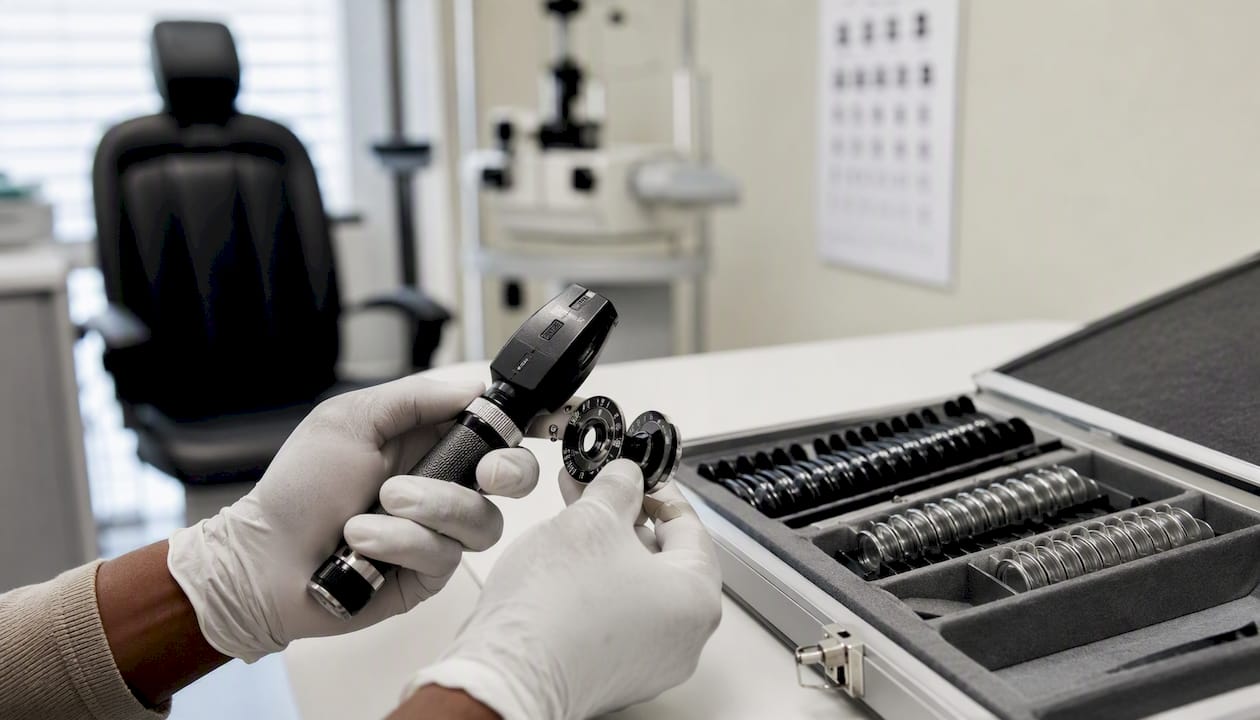
Prepare your documents before the portal opens. Certified copies take time. ID documents, school results, and any supporting letters should be ready weeks before the application deadline, not the day before.
Consider a bridging course if you are short on prerequisites. If Mathematical Literacy was your maths option or you did not take Physical Sciences, a bridging programme or accredited diploma in a science-related field may open a pathway. The Asksmarty colleges guide explains alternative routes and bridging options available in South Africa.
Pro Tip: Raising one subject from Level 4 to Level 5 can shift your application from the rejection pile to the shortlist in a capped programme. If you have time before your final matric exams, identify your weakest required subject and focus there specifically.
How Asksmarty helps you verify eligibility and find the right programme
Knowing the optometry requirements is one thing. Knowing whether your specific marks qualify you for a specific programme at a specific university is another. That is the gap Asksmarty fills.
The platform’s APS calculator lets you enter your matric subject results and instantly see your calculated APS score, with Life Orientation correctly excluded. From there, the programme database, which covers over 1,700 programmes across South African universities and colleges, filters results to show which optometry and health programmes you are eligible for based on your marks.
- Enter your subject levels and get your APS in seconds
- Filter by programme type (Bachelor of Optometry) to see matching institutions
- Access direct links to official university admissions pages to confirm current cut-offs
- Check application deadlines and fee information without leaving the platform
Your marks never leave your device. Asksmarty does not process applications or charge students; it is a free tool that sits between your matric results and the official university portals.
Pro Tip: After using the Asksmarty programme match, always click through to the official university admissions page to confirm the current cycle’s cut-offs. APS thresholds and selection rules can change year to year, and the university’s own page is the authoritative source.
What admissions teams actually look for beyond your APS
Most students fixate on the APS number and treat everything else as secondary. That is a mistake, especially for capped programmes like optometry.
Admissions teams for health programmes look at your science subject profile first. A student with an APS of 32 built on strong Mathematics and Physical Sciences is a more credible applicant than one with 33 built on a mix of less relevant subjects. Consistency across the required science subjects signals that you can handle the programme’s workload, not just that you studied hard in the subjects you found easy.
Clinical interest matters too, even at the undergraduate level. Evidence of shadowing, voluntary clinic work, or even a well-written motivation letter that shows you understand what optometrists actually do separates borderline applicants. Programmes are training future clinicians. They want to see that you have thought about the profession beyond the career prospects.
On the day you submit your application, check three things before you click send: every document is certified with a recent date, file names are clear and match what the portal asks for, and you have kept copies of everything submitted. Administrative errors are a surprisingly common reason for applications to stall or be rejected outright.
Asksmarty gives you a clear starting point for your optometry application
Sorting through university admissions pages, calculating your APS manually, and cross-checking subject requirements across three institutions takes hours. Asksmarty cuts that process to minutes.
Enter your matric results into the Asksmarty APS calculator and get an instant match against optometry and health programmes across South Africa. The tool shows you which institutions you qualify for, links directly to their official admissions pages, and flags current application deadlines. Everything is free, and your data stays on your device. Browse the full South African universities guide to compare programmes, check fees, and find the application portal for each institution. Start with your APS, then follow the university link to confirm the current cycle’s requirements before you apply.
Sources
Verify current requirements directly from these official sources before you apply. Cut-offs, deadlines, and selection rules change each cycle.
- Optometry
- Undergraduate Programmes - Discipline of Optometry - UKZN
- Department of Optometry
- Health Professions Council of South Africa (HPCSA)
Use the HPCSA site for any question about registration, CPD, or what happens if your registration lapses. Use the university pages for anything about entry requirements, module outlines, and application deadlines. Save these links and revisit them each year before the application window opens.
FAQ
What APS score do you need for optometry in South Africa?
The APS requirement varies by institution: the University of Johannesburg requires an APS of 31, the University of Limpopo sets its threshold around 27, and UKZN’s effective cut-off is typically around 33. Meeting the minimum makes you eligible to apply, but admission is competitive and capped.
How long does it take to become an optometrist in South Africa?
The Bachelor of Optometry takes four years of full-time study. After graduation, you must complete a mandatory internship before you can apply for full HPCSA registration and practise independently.
How many points do you need for optometry at UKZN?
UKZN’s Bachelor of Optometry programme typically requires an APS of around 33 (excluding Life Orientation), along with strong performance in the required science subjects. Check the UKZN optometry admissions page directly for the current cycle’s confirmed requirements.
How much do optometrists earn in South Africa?
Optometrist salaries in South Africa vary by sector, experience, and location. Publicly available salary data is not consistently published by a single authoritative source; the South African Optometric Association and HPCSA are the best starting points for current professional remuneration guidance.
What subjects do you need for optometry at matric level?
You need Mathematics (not Mathematical Literacy), Physical Sciences or Life Sciences, and English as your core subjects, each at a minimum of Level 5. These subjects are non-negotiable across all South African Bachelor of Optometry programmes.
Recommended
- How to Apply to a South African University or College | AskSmarty
- Colleges in South Africa - Private Colleges & TVET Explained | AskSmarty
- AskSmarty - Find your course anywhere in South Africa, check if you qualify, apply
- University Admission Requirements - APS, NSC Passes, NBT & NQF Explained | AskSmarty
Published 2026-08-15 · AskSmarty is an independent guide. Confirm anything time-sensitive on the official source.