Map Your Psychology Entry Requirements to 1,700 SA Programmes
Check the matric subjects and APS you need for psychology in South Africa. Run marks through a free APS calculator to match 1,700 programmes.
To study psychology in South Africa, you need at minimum an NSC Bachelor’s pass, and your matric subjects matter more than you’d think: BSc Psychology streams typically demand Mathematics, while BA Psychology routes will often accept Mathematics Literacy. Your Admission Point Score (APS) is the next number to check, ideally using a free calculator, against each university’s published cut off. Nelson Mandela University, Wits, UJ, UP, and UCT all publish the specifics on their own faculty pages.
TL;DR:
- Meeting the minimum faculty requirements does not guarantee admission, as universities select candidates based on higher actual cut-offs beyond the published minimums.
- Admission thresholds vary annually and are influenced by the number and quality of applications, making it essential to estimate your APS score with an up-to-date calculator before applying.
- BSc psychology programs generally require Mathematics or Technical Mathematics, whereas BA programs often accept Mathematics Literacy, affecting your subject choices starting in Grade 10.
- Strong English skills are crucial since psychology involves substantial reading and writing; weak English grades can harm applications even with good Maths results.
- If you fall short on the minimum requirements, options include bridging courses, subject upgrades, or private diploma pathways, but these extend your timeline and may have different recognition levels.
Table of Contents
- What “psychology entry requirements” actually mean: BA vs BSc, minimum vs selection
- Matric subjects psychology degrees actually want
- How to read your APS score against real programme cut offs
- NBT requirements, selection mechanics, and the paperwork you’ll need
- How Nelson Mandela University, Wits, UJ, UP and UCT compare in practice
- If you don’t meet direct entry, here are your realistic options
- What most applicants get wrong about entry requirements
- Check where you qualify before you apply anywhere
- Sources
- FAQ
What “psychology entry requirements” actually mean: BA vs BSc, minimum vs selection
Two separate hurdles decide whether you get into a psychology programme, and confusing them is where most applicants trip up. The first is the National Senior Certificate (NSC) pass type. You need a Bachelor’s pass, not a Diploma or Higher Certificate pass, to qualify for degree study at any public university in South Africa. That single credential is non-negotiable across every psychology department in the country.
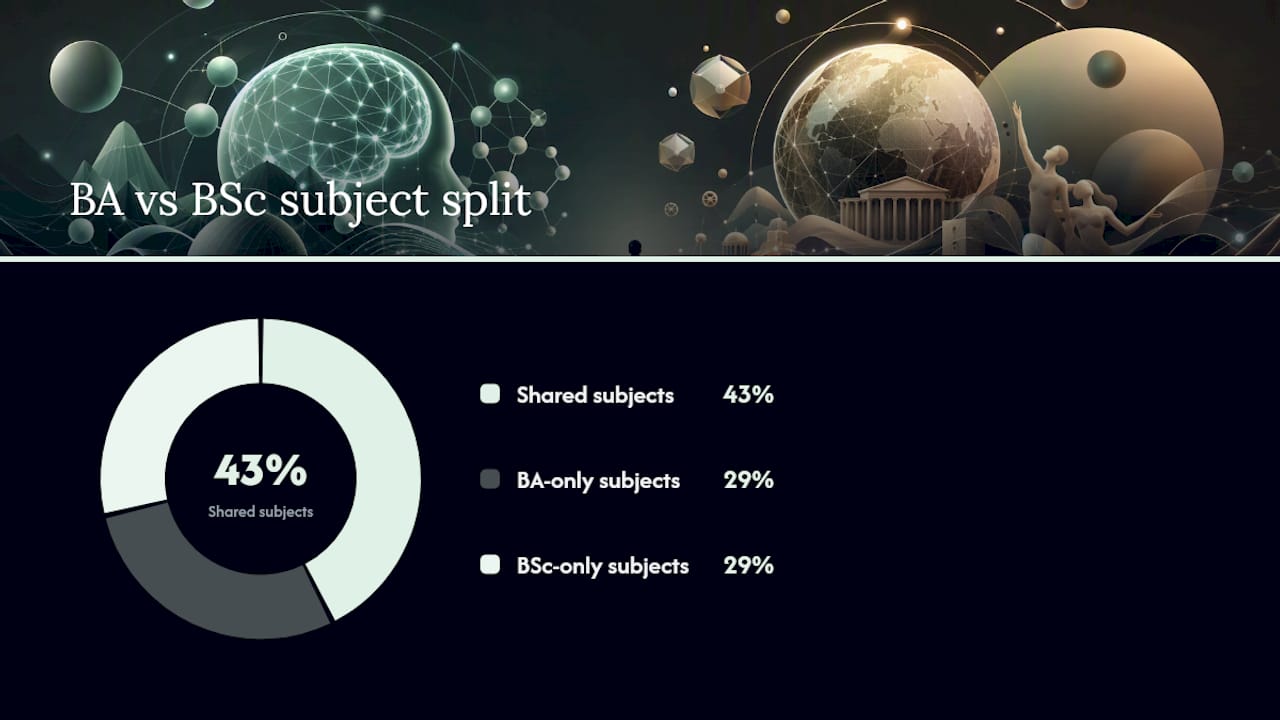
The second hurdle is subject specific, and this is where BA and BSc genuinely diverge. A BA in Psychology usually treats Mathematics Literacy as sufficient, because the degree leans toward the humanities side of the discipline: social psychology, developmental theory, qualitative methods. A BSc in Psychology, by contrast, feeds into the statistics and research design components more heavily, and most departments expect actual Mathematics rather than Mathematics Literacy for that stream, as Nelson Mandela University’s psychology department notes on its own programme pages.
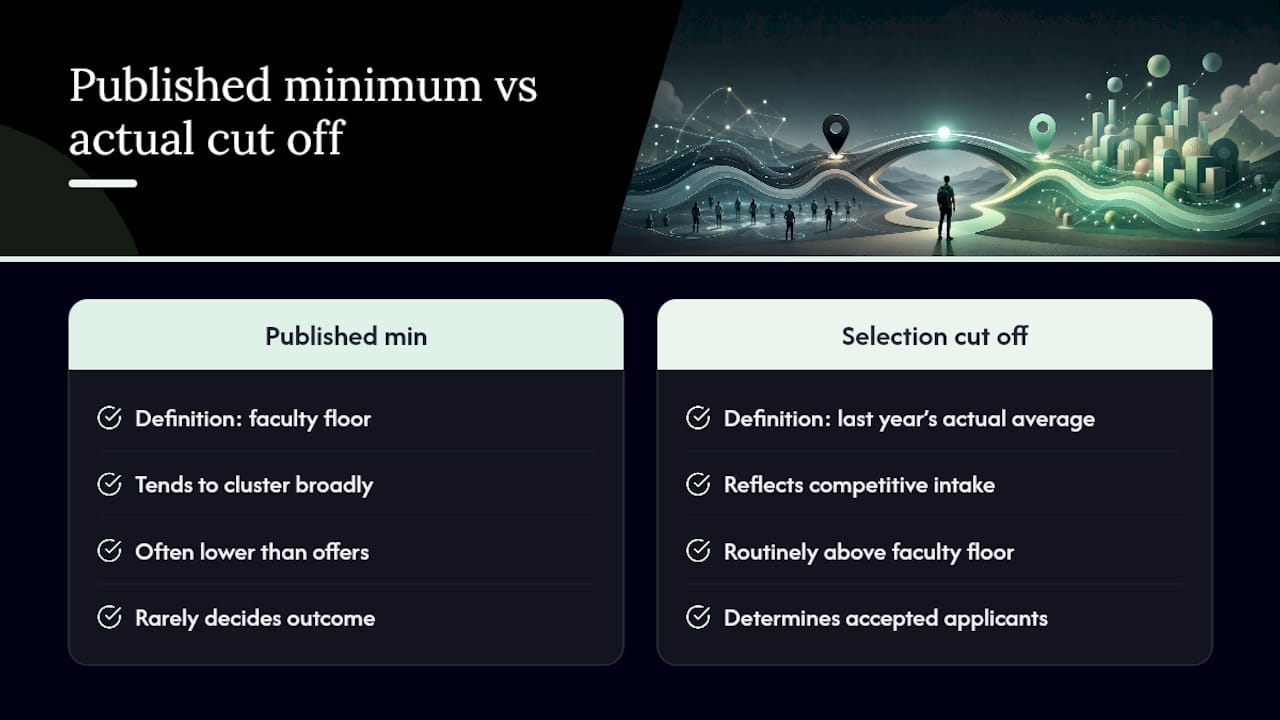
Here’s the part that catches people off guard: meeting the minimum faculty requirement doesn’t mean you’re getting in. Universities publish a floor, then run selection above it once applications exceed available seats. This distinction shows up constantly in how departments describe their own admissions:
- Minimum requirement: the lowest NSC pass and subject combination the faculty will legally consider.
- Selection cut off: the actual APS or subject average successful applicants presented in a given year, which is often several points higher.
- Programme specific rules: some psychology degrees sit inside a Bachelor of Social Science, others inside a Bachelor of Arts or Bachelor of Science, each with its own faculty gatekeeping.
- Accreditation status: the Health Professions Council of South Africa (HPCSA) only recognises certain postgraduate pathways for professional registration, so check that your undergraduate degree feeds into an accredited honours or masters route if you’re aiming to practise as a registered psychologist eventually.
That gap between minimum and selection is why two students with identical NSC results can get opposite outcomes at the same university in different years.
Matric subjects psychology degrees actually want
English at Home Language or First Additional Language level is close to universal across South African psychology departments, and that’s not a formality. Psychology is a reading and writing heavy discipline: essays, literature reviews, case study analysis. Weak English marks quietly sink otherwise strong applications more often than weak Maths marks do.
The Mathematics question is the one that actually splits applicants into two camps. Here’s the practical breakdown:
- BA Psychology streams generally accept Mathematics Literacy, since the emphasis sits on theory, ethics, and qualitative reasoning rather than heavy statistical modelling.
- BSc Psychology streams commonly require Mathematics or Technical Mathematics, because the degree structure includes more formal statistics and research methods content from first year onward.
- Life Sciences strengthens applications for both streams and is often listed as recommended, particularly where the psychology degree sits alongside biological or health science modules.
- Physical Sciences carries weight mainly for BSc applicants layering psychology with a science major, less so for pure BA routes.
If you’re still in Grade 10 and unsure which way you’ll go, keep both doors open. Choose Mathematics over Mathematics Literacy if there’s any chance you’ll want the BSc route later, since switching from Literacy back to Mathematics mid way through senior phase is difficult and sometimes impossible depending on your school’s timetable.
A typical BA-track combination looks like English, an additional language, Life Sciences, History or Geography, and Mathematics Literacy. A typical BSc-track combination swaps in Mathematics and Physical Sciences instead of the Literacy and humanities elective. Neither combination is objectively harder to pass, but they lead to genuinely different degree experiences once you’re on campus.
Pro Tip: If you’re not sure which stream you want yet, taking full Mathematics in Grade 10 costs you nothing extra and keeps every psychology pathway, BA or BSc, open until you have to commit in Grade 11.
How to read your APS score against real programme cut offs
Your APS is a points total built from your best six or seven NSC subjects, with each achievement level converting to a fixed number of points, typically running from 1 point for the lowest level to 7 or 8 for the highest depending on the university’s own scale.
Published minimums for general psychology degree admission tend to cluster in a broad band, but the number that actually matters is the selection cut off, not the faculty floor. Wits, for example, is explicit that its popular undergraduate programmes routinely draw applicants well above the stated minimum, which pushes the real acceptance threshold higher every year. UCT’s psychology department runs on a similar logic: strong subject profiles and higher APS scores are what separate accepted applicants in a competitive intake, not the bare minimum listed on the faculty page.
The number that actually decides your outcome isn’t the published minimum. It’s last year’s actual selection average, which universities rarely advertise upfront.
That’s exactly why running your own marks through an APS calculator before results day matters more than memorising a single cut off figure you found online. Cut offs shift annually based on how many students apply and how they perform, so a number from two years ago can mislead you either way.
NBT requirements, selection mechanics, and the paperwork you’ll need
The National Benchmark Test (NBT) isn’t universal for psychology applicants, and policy on it varies by university and sometimes by year, so treat any blanket claim about it with caution. Some faculties use NBT results as one input into a broader selection formula alongside your NSC marks; others don’t require it for psychology specifically even when they use it for other programmes. Confirm directly on the university’s own admissions page for the year you’re applying, not from a forum post or a friend’s experience from three years ago.
Beyond the NBT, selection runs through a few consistent mechanics:
- Merit ranking: applicants are ordered by APS or a weighted subject score once demand exceeds available places.
- Limited admission status: many psychology programmes cap intake numbers, which is why “meets requirements” and “gets an offer” aren’t the same sentence.
- Faculty level screening: some universities route psychology applications through a broader Humanities or Science faculty first, with psychology as a major declared later.
For the paperwork itself, prepare certified copies of your ID, your final or most recent NSC results, your subject list showing achievement levels, and proof of any additional assessments like the NBT if the university you’re applying to requires it. Missing a certification stamp on a results printout is a small, avoidable reason applications get delayed.
How Nelson Mandela University, Wits, UJ, UP and UCT compare in practice
No two South African psychology departments phrase their requirements identically, and that’s precisely why checking the source document matters more than trusting a summary, including this one.
- Nelson Mandela University distinguishes clearly between its BA and BSc psychology tracks, with Mathematics Literacy accepted for BA but Mathematics expected on the BSc side.
- Wits publishes its psychology admissions through the School of Human and Community Development, where demand regularly pushes actual selection above the stated faculty minimum.
- University of Johannesburg lists subject and APS detail directly on its psychology department pages, including how the degree sits within the broader Humanities faculty structure.
- University of Pretoria sets out its programme structure and admission information on its psychology department site, worth checking each year since UP revises its APS bands periodically.
- UCT runs one of the more competitive intakes nationally, and its department pages make clear that a strong subject profile matters even once you’ve cleared the minimum.
- UNISA, as a distance provider, and University of Limpopo, with its own dedicated psychology admissions listing, both illustrate how requirements and selection logistics shift outside the traditional contact university model.
When you land on any of these pages, look for four things specifically: the required subject list, the current APS figure, any NBT mention, and whether the programme describes itself as having limited or open admission. Those four data points tell you almost everything you need before you apply.
If you don’t meet direct entry, here are your realistic options
Missing the mark on Mathematics or falling short on APS doesn’t close the door permanently. It does mean a longer route, and you should go in knowing the real timeline rather than a vague promise of “you can always catch up later.”
- Higher certificates and bridging programmes can create an articulation pathway into a full degree, though credit transfer depends entirely on the specific agreement between the certificate provider and the receiving faculty, so confirm this before enrolling, not after.
- Rewriting matric or upgrading a single subject through supplementary exams is possible in some provinces and adds roughly a year before you can reapply with an improved subject profile.
- Private diploma providers sometimes offer faster access routes into psychology adjacent study, but weigh that against returning through the standard public university application cycle, which costs less and carries broader recognition.
What most applicants get wrong about entry requirements
The mistake I see repeated most often isn’t a weak APS. It’s locking into Mathematics Literacy in Grade 10 before actually deciding between a BA and BSc psychology future, then discovering in Grade 12 that the BSc door has quietly closed. The second common error is treating one university’s published minimum as if it applies everywhere. It doesn’t. Before you finalise anything, map your actual marks privately using Asksmarty’s APS calculator rather than guessing from a single faculty page.
— Nkosi
Check where you qualify before you apply anywhere
Guessing your APS from a printed results slip is how good applicants miss programmes they’d actually get into. Asksmarty’s APS calculator does the conversion instantly, and because your marks stay on your own device, nothing gets uploaded, stored, or sold to a third party the way some application platforms handle student data.
Once you’ve got a real APS figure, run it against Asksmarty’s database of over 1,700 university and college programmes to see which psychology degrees, BA or BSc, you genuinely qualify for right now, not just in theory. The programme search shows current deadlines and application fee details alongside each listing, and our requirements explainer breaks down APS, NSC pass types, NBT, and NQF levels in plain language if any of that terminology is still unclear. From there, follow the official university application link listed on each programme page to submit directly, no extra forms through Asksmarty, no processing fees.
Sources
- Undergraduate programmes — Department of Psychology, Nelson Mandela University
- School of Human and Community Development — Wits University (psychology)
- Department of Psychology — University of Johannesburg
- Department of Psychology — University of Pretoria
- Department of Psychology — University of Cape Town
FAQ
What APS score do you need to study psychology?
Requirements vary by university and by BA versus BSc stream, with competitive programmes like UCT and Wits often selecting well above the published minimum. Run your own marks through an APS calculator to see where you stand against current programme listings.
Can I study psychology without maths?
Yes, if you’re applying to a BA Psychology stream, since Mathematics Literacy is generally accepted there. BSc Psychology streams, however, usually require actual Mathematics rather than Mathematics Literacy.
What Grade 10 subjects are needed for psychology?
Keep English, Life Sciences, and Mathematics in your Grade 10 line up if you’re unsure which stream you’ll choose, since Mathematics keeps both BA and BSc psychology routes open. Switching from Mathematics Literacy back to Mathematics later is usually difficult.
Which subjects do I need to study psychology?
English at Home or First Additional Language level is expected everywhere, with Mathematics or Mathematics Literacy depending on whether you’re aiming for a BSc or BA stream. Life Sciences and Physical Sciences strengthen an application but are typically recommended rather than compulsory.
Recommended
Published 2026-09-11 · AskSmarty is an independent guide. Confirm anything time-sensitive on the official source.